What French Drain Installation Involves in Asheville, NC
Think of a french drain as three things working together: a trench with a slope, a pipe that collects water and an exit for that water. Your quote shows which of the parts below your property needs:
- Water mapping walks the lot and the foundation to find where water gathers, so the drainage trench follows its real path.
- Sloped trench is dug with a drop of at least one foot every hundred feet, which keeps the pipe moving water toward the exit.
- Filter fabric wraps the gravel and pipe so fine soil stays out and the system lasts longer between cleanings.
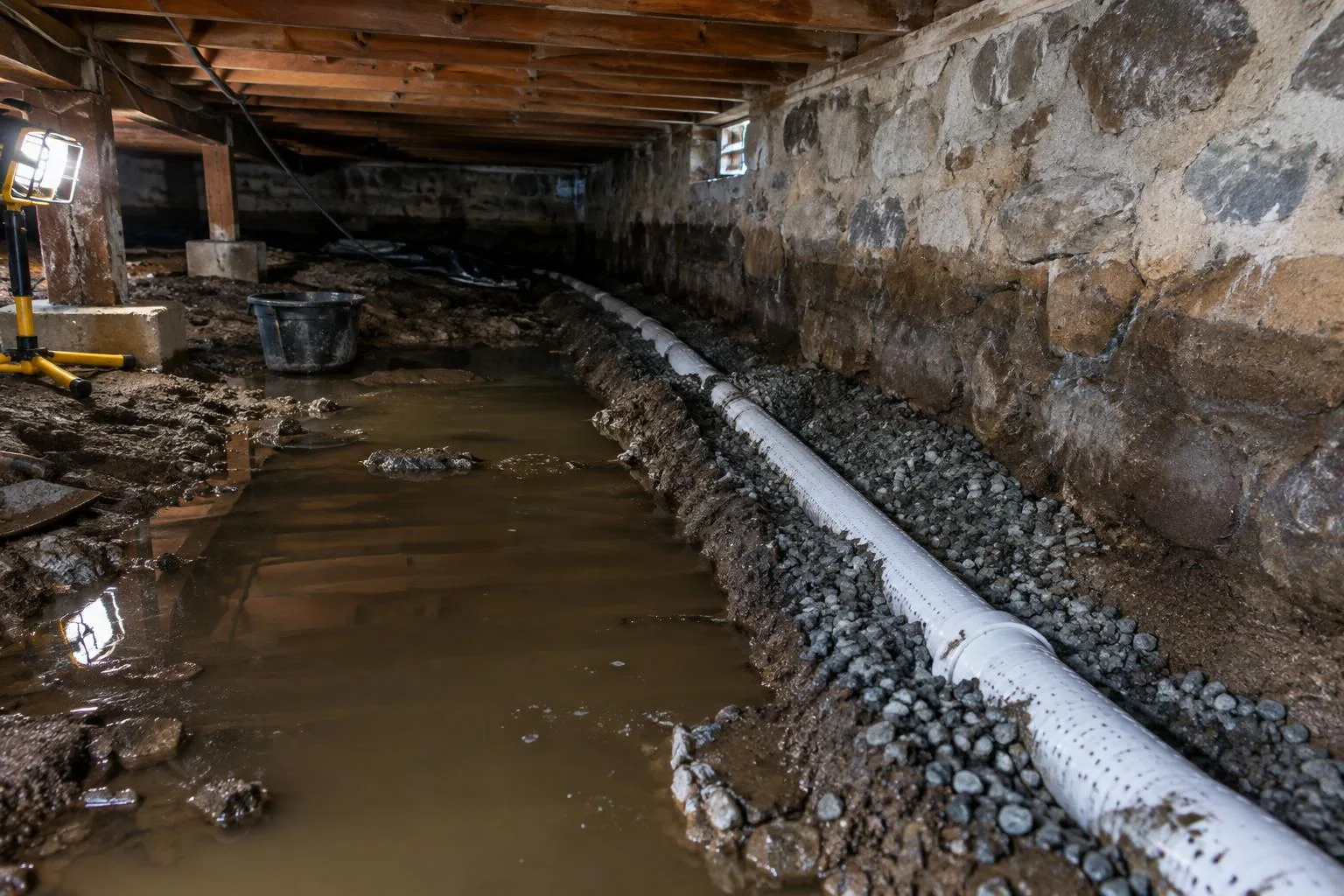
- Gravel and pipe go in together, with perforated pipe bedded in washed stone that gives water room to enter.
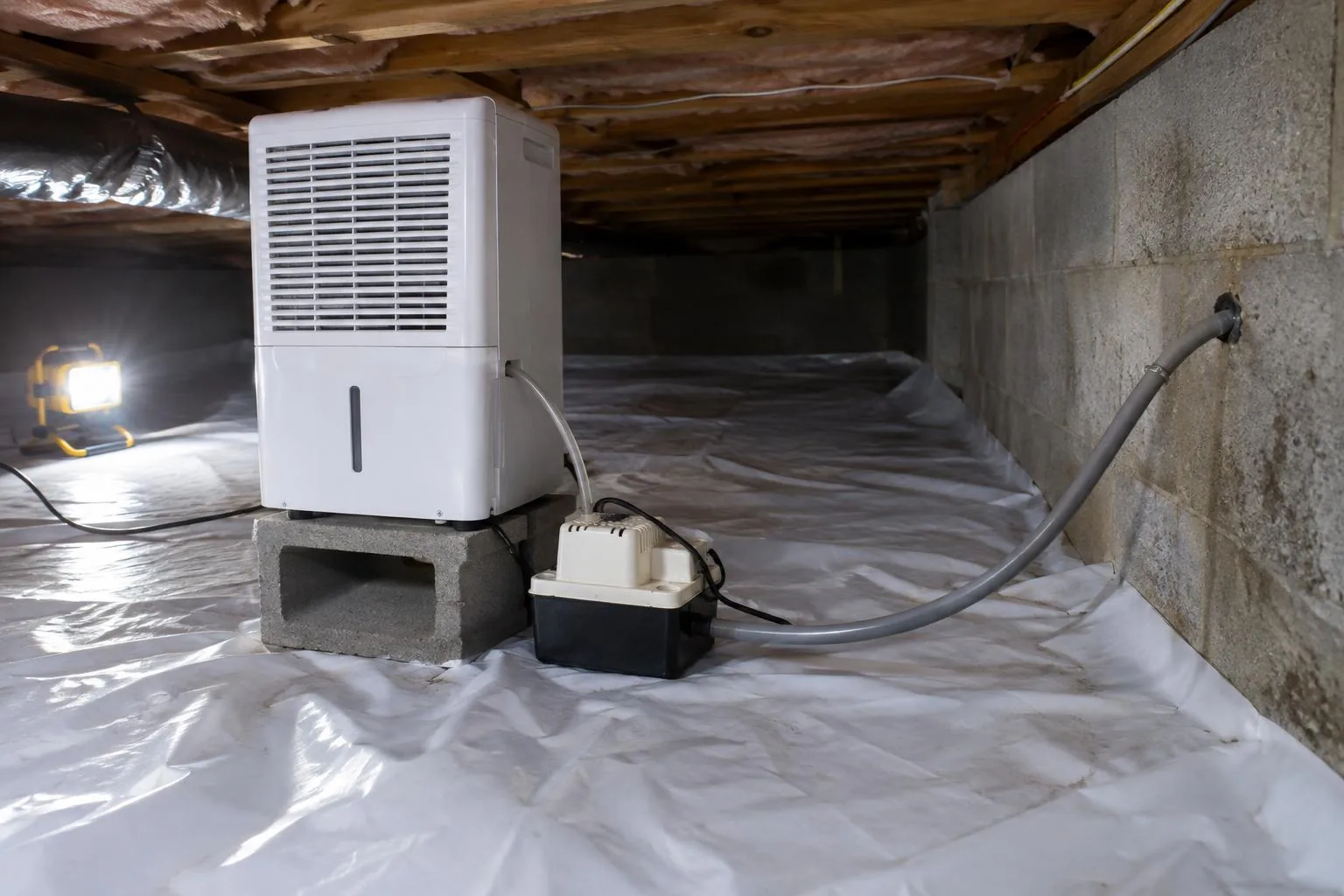
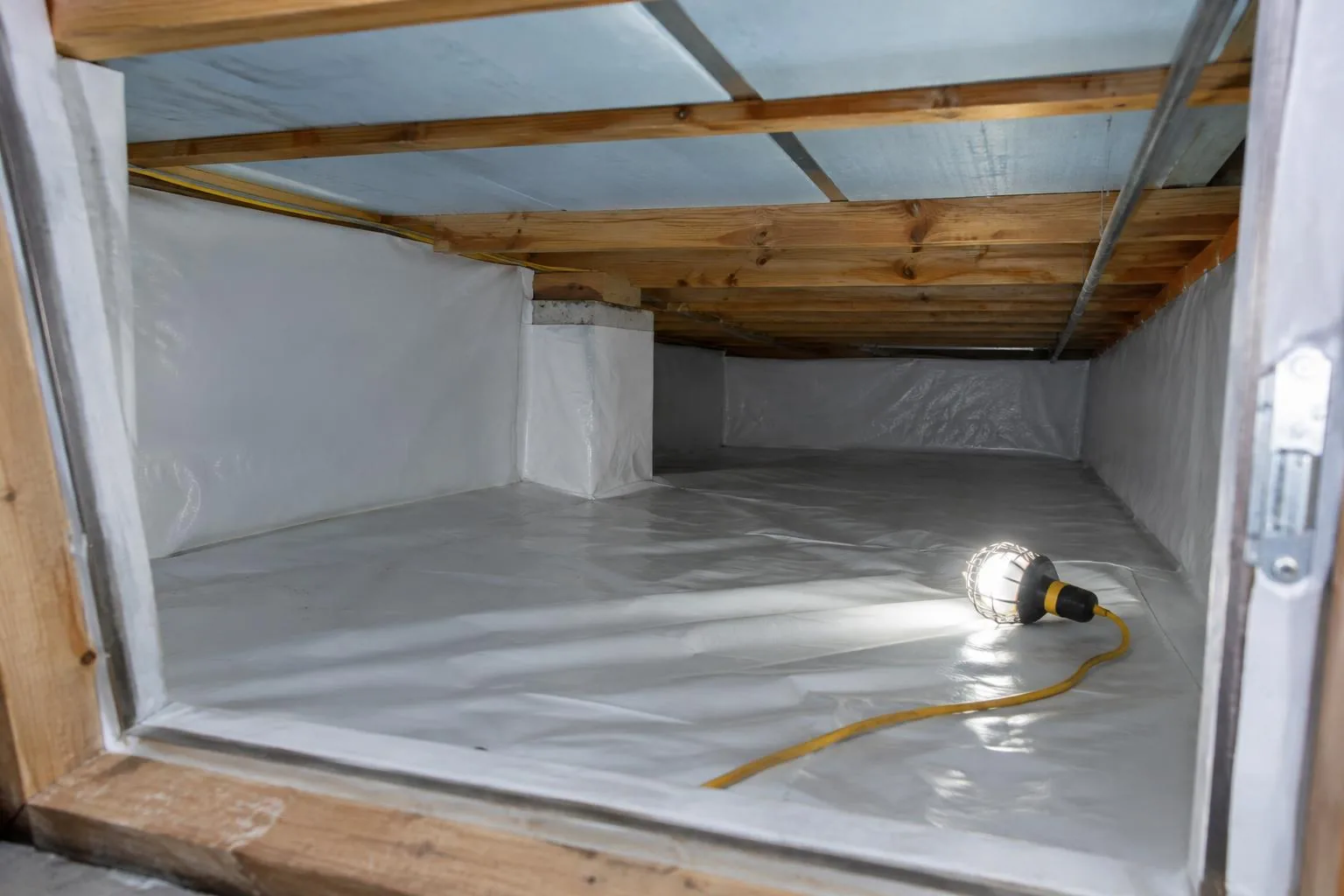
- Crawl space drain runs along the inside edge of the space and ties into a pit, which pairs with crawl space waterproofing work.
- Basement french drain follows the footing under the slab edge and feeds a pit, the same layout used in basement waterproofing.
- Perimeter and yard drains pick up runoff outdoors before it settles against the foundation walls.
- Exit point sends the water downhill, to a dry well or to a pump when the lot has no way down.
- Flush port gives the pipe an opening for yearly rinsing, which keeps silt from building up.